
Maximum Allowable Offer (MAO) Calculator
Before I get excited about a property, I calculate my maximum allowable offer. Plug in the after-repair value (ARV) and rehab budget. The calculator runs the 70% Rule so you know the most you should pay before holding costs, selling fees, and profit eat the deal.
Estimates only. This is a guideline, not a lender approval — actual financeable amount depends on the specific loan program's terms.
How Maximum Allowable Offer Is Calculated
MAO = (ARV × 0.70) − estimated renovation costs. That is the whole formula. You can run it on your phone in the parking lot after a showing.
The 30% you are not paying upfront is not random. It is there to absorb agent commissions, closing costs, interest and taxes while you own the property, and still leave profit if the project goes mostly to plan.
Use the sliders above to stress-test your MAO. If the number feels impossible in your market, that might be the market telling you something, not the calculator being wrong.
What Is Maximum Allowable Offer (MAO)?
Maximum allowable offer is the top price you can pay on a property and still have room for the rehab, the carry, and a profit worth taking the risk. It keeps you from overpaying because the kitchen has "good bones" or the seller seems motivated.
On a fix and flip, MAO starts with after-repair value (ARV): what the house should sell for once the work is done, based on recent comps, not Zillow guesses or wishful thinking. From there you subtract renovation costs and a built-in margin so you are not betting the whole project on everything going perfect.
I treat MAO as a hard ceiling. If the seller will not get close, I walk. If I stretch past MAO, I am usually buying someone else's problem at my expense.
How to Calculate MAO on a Fix and Flip
Most investors I work with use the 70% Rule to get to MAO quickly:
MAO = (ARV × 0.70) − estimated renovation costs
That is the same math wholesalers and rehabbers argue about online, just with different percentages depending on exit strategy. Wholesalers often work closer to 60% of ARV minus repairs because they need room for an assignment fee. I am underwriting fix-and-flip loans, so 70% minus rehab is the starting line I expect most of my borrowers to use before they call me.
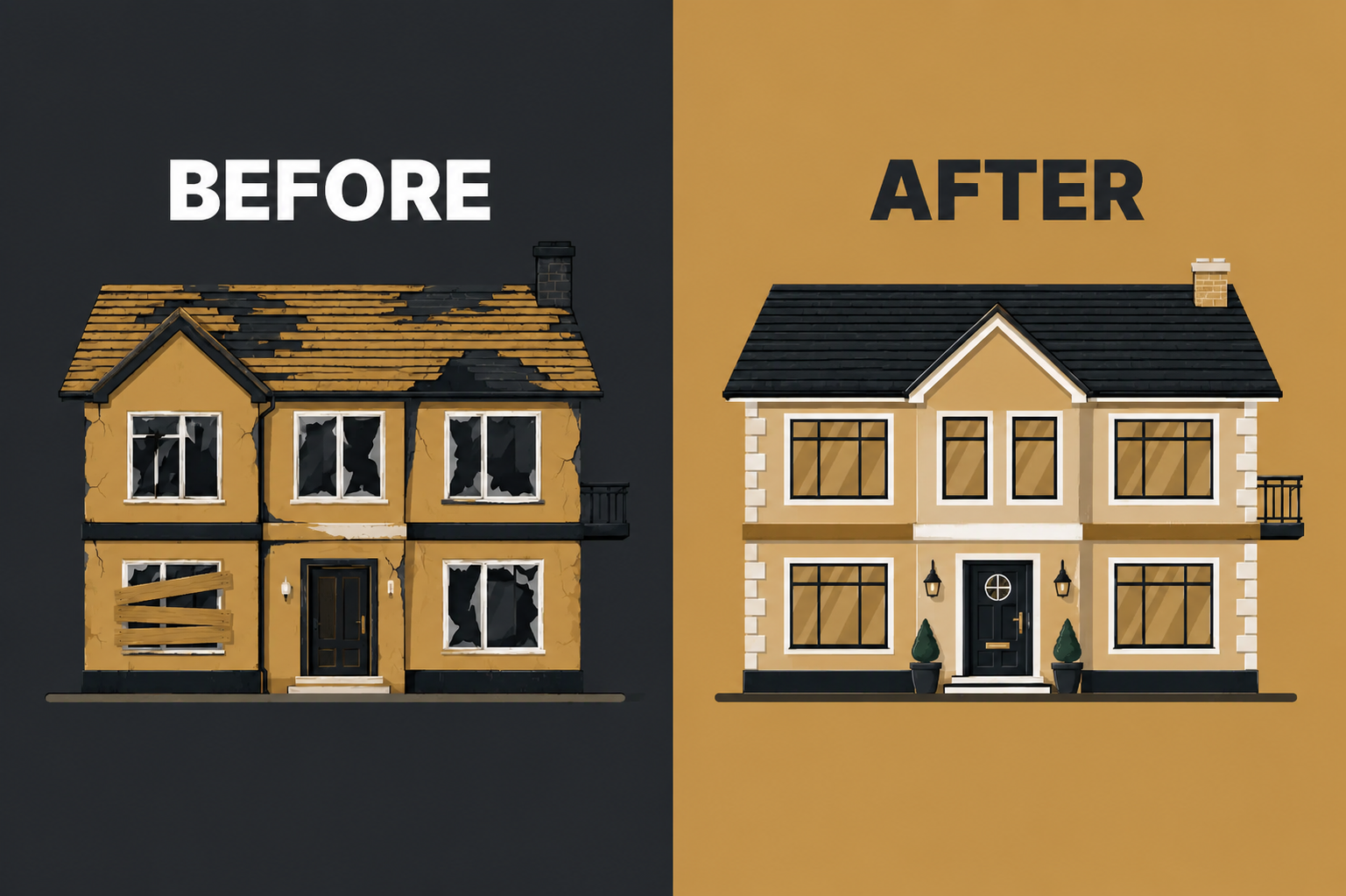
$500,000 ARV × 0.70 = $350,000, minus $50,000 rehab = $300,000 maximum allowable offer. If rehab creeps to $60,000, your MAO drops to $290,000. Same ARV, different ceiling.
Why I Calculate MAO Before I Make Any Offer
I am not running MAO because the formula is perfect. I run it because it is fast. In a competitive market you do not have time to build a full model on every lead.
Know your MAO before you talk numbers with a seller. Then do not open at your max. Anchor lower and negotiate up only if the deal still pencils. MAO is your ceiling, not your first number.
The rule also builds discipline when you want to stretch $15,000 because "the ARV feels conservative." If a deal does not clear your MAO, I keep digging or I walk.
Treat MAO as your first filter. If the property passes, pressure-test ARV, rehab scope, and carrying costs before you write the offer.
What MAO Does Not Cover
MAO is a rule of thumb, not a complete pro forma. It will not spell out your holding timeline, hard money rate, or exit strategy line by line.
- Holding costs Interest-only payments, property taxes, and insurance while you own the project, often 3 to 6 months on a flip.
- Financing costs Origination, doc fees, and points at close. Run theProfit Calculatorfor those.
- Bad estimates Inflated ARV or a light rehab quote breaks the whole MAO. Be conservative on both. I would rather miss a deal than chase a bad one.
- Market variation A 70% MAO in San Diego is not the same as a 70% MAO in a slower market. Sometimes you need 60% or 50% to sleep at night.
When to Lower Your MAO Below 70%
I tighten the percentage when comps are thin, the property is unique, or I need a bigger margin for a longer hold. There is no shame in using60% or 50% of ARV minus rehab if that is what your market demands.
A deal that only works at exactly 70% with aggressive ARV and a tight rehab budget? That is usually a pass for me. Send it anyway if you want a second set of eyes. I will tell you straight if the numbers hold up.
MAO vs What Hard Money Will Actually Fund
Your MAO and your loan amount are related but not the same thing. MAO is how you decide what to offer. My fix-and-flip files are capped by loan-to-cost and loan-to-ARV, typically around 75% of ARVall-in for experienced borrowers.
You can have a MAO that looks fine on paper and still not fit the loan if the purchase price, rehab, and ARV do not line up with leverage limits. That is why step two after MAO is running the full picture on the profit calculator or sending me the address.
How I Use MAO With the Rest of the Numbers
Step one: calculate MAO here. Step two: if it passes, plug your offer into theFix & Flip Profit Calculatorfor cash required, reserves, and estimated profit with real financing assumptions. Step three: send me the address and I will tell you how I would finance it, or why I would walk.
MAO gets you in the ballpark. The rest is making sure there is real profit left when you are done.
Maximum Allowable Offer (MAO) FAQ
What is maximum allowable offer (MAO) in real estate?
Maximum allowable offer (MAO) is the highest price you can pay for a property and still leave room for rehab, holding costs, selling costs, and profit. On a fix and flip, I calculate it as MAO = (ARV × 0.70) − estimated renovation costs. It is a screening number, not a lender approval.
How is maximum allowable offer calculated?
Start with after-repair value (ARV), multiply by 70%, then subtract your rehab budget. Example: $500,000 ARV × 0.70 = $350,000, minus $50,000 rehab = $300,000 MAO. If rehab jumps to $60,000, your MAO drops to $290,000. Re-run the math every time the scope changes.
What is the 70% Rule and how does it relate to MAO?
The 70% Rule is the shortcut most fix-and-flip investors use to find MAO fast. The 30% you leave on the table is meant to cover selling costs, interest and taxes while you hold, and profit. It is a rule of thumb, not a full pro forma.
Should I offer my full MAO to the seller?
No. Know your MAO before you negotiate, but do not lead with it. I anchor lower and work up only if the deal still pencils. Your MAO is a ceiling, not your opening bid.
Does MAO include holding and financing costs?
Not line by line. The 30% cushion is supposed to absorb selling costs, holding costs, and profit, but it does not spell out your hard money rate or timeline. That is why I run MAO here first, then plug the offer into our Fix & Flip Profit Calculator or send me the deal for real loan terms.
When should I use 60% or 50% of ARV instead of 70%?
When comps are thin, the property is unusual, or you need a bigger margin for a longer hold. A deal that only works at exactly 70% with aggressive ARV and a tight rehab budget is usually a pass for me.
Does this MAO guarantee I'll get approved for that offer?
No. This is a planning guideline. What you can actually finance depends on loan-to-cost, loan-to-ARV caps, your experience, and the property. Treat MAO as your negotiation ceiling, then confirm numbers with a lender before you go hard on price.
How is this different from the Profit Calculator?
This tool works backwards from ARV and rehab to find your MAO. The Fix & Flip Profit Calculator works forwards from a purchase price you already have to show projected profit, cash required, and reserves with financing assumptions baked in.
Have a Deal to Run By Me?
Send the address, your MAO, and the rehab scope. I will tell you whether it pencils and how I would finance it. Usually same day.