Do You Need an LLC to Flip Houses?
An LLC is the preferred way to hold a fix and flip because hard money loans are business-purpose loans, but a brand-new investor with a can't-miss deal can still get funded without letting entity setup kill the opportunity.

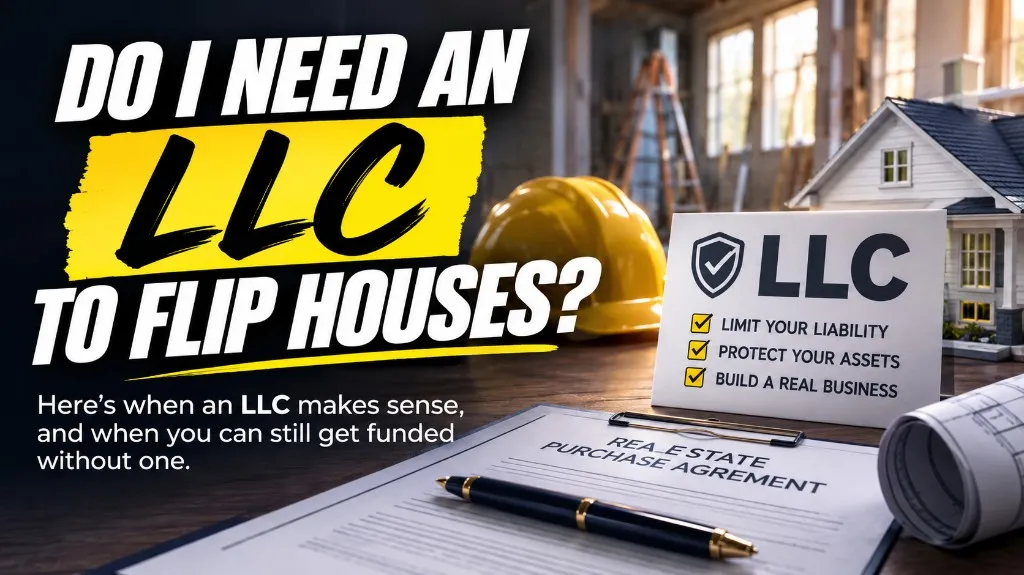
Yes, an LLC is the way to go for most fix and flip loans. Hard money financing is business-purpose lending, and buying under an entity is the cleanest way to support that. That said, if you are brand new and a deal you cannot pass up shows up before the LLC paperwork is done, you can still get it funded. Do not let entity setup ruin a good deal.
I hear some version of this every week from first-time investors. They find a property that pencils. Then they freeze because someone online said you have to form an LLC first, open a business bank account, get an EIN, and only then talk to a lender.
Some of that is good long-term practice. None of it should be the reason a solid deal dies while you wait on paperwork.
Why Is an LLC the Preferred Path for Fix and Flip Loans?
Because fix and flip loans are business-purpose loans, not consumer mortgages. The lender is funding an investment project, not a primary residence. Holding the property in a limited liability company (LLC) lines the deal up with that intent from day one.
At Best Lending Co, we strongly encourage borrowers to buy under an LLC for that reason. It keeps the file in the business lane, which is where hard money belongs. Personal-name files can get underwriting pushback. Entity files usually do not.
This is not legal or tax advice. Talk to your attorney and CPA about liability and taxes. From the lending seat, the LLC is the cleaner structure for a business-purpose fix and flip loan.
What Happens If Title and the Loan Do Not Match?
They have to match. If the loan is under your LLC, title needs to vest in that same LLC. You cannot borrow under an entity while the purchase sits in your personal name, or the reverse.
That is the operational detail people miss when they try to “set up the LLC later.” Closing wants the borrower and the vesting to be the same party. Plan the entity (or the personal-name path) before you are under contract if you can. If you cannot, call the me early so the file is structured correctly from the start.
Do You Still Need a Personal Guarantee With an LLC?
In most hard money deals, yes. An LLC does not mean the lender ignores you as a person. Principals typically sign a personal guarantee even when the borrower is the entity.
So the LLC is about structure and business purpose. It is not a magic shield that removes you from the file. Expect credit, liquidity, and experience to still matter. For first-time investors, Best Lending Co typically looks for a 680 credit target (650 floor), a deal that stays under about 75% of ARV all-in, and reserves covering six months of interest-only payments plus 20% of the rehab budget.
Can You Close a Flip in Your Personal Name?
Yes. Both paths are doable. LLC is strongly preferred. Personal name is still possible when the deal and the borrower are strong enough.
That matters if you are a first-timer and the clock is ticking. Maybe the LLC is stuck with the state. Maybe your partner has not signed the operating agreement. Maybe you found the house on Tuesday and the seller wants to close in two weeks.
Do not throw away a deal that pencils because the entity is not perfect yet. Call me, explain where you are, and structure the file so it can close. At Best Lending Co, first-time investors still qualify on fix and flip loans. Leverage and pricing may shift a bit versus a seasoned flipper (typically about 2.5% less max leverage, rates often 1 to 1.5% higher, origination often 1%+ higher), but experience is not a hard wall.
Business-purpose structure is the goal. A can't-miss deal should not die waiting on entity paperwork.
When Should You Set Up the LLC Before You Hunt for Deals?
If you are not under contract yet, set the LLC up first. It is cheaper and calmer to do it when there is no deadline.
A simple pre-deal checklist:
- Form the LLC In the state where you plan to operate, with help from counsel if you need it.
- Get your EIN and operating agreement Lenders will ask for entity docs on a business-purpose file.
- Open a business bank account Keep project funds clean and easy to document for reserves.
- Talk to your me before you offer Confirm vesting, guarantee expectations, and what the file needs to close fast.
That is the ideal order. Ideal is not the same as mandatory on day one of a surprise deal.
What Should You Do If a Deal Shows Up Before the LLC Is Ready?
Move on the deal and the financing conversation in parallel. Do not pause the opportunity for weeks of entity perfection.
- Run the numbers honestly (purchase, rehab, ARV, holding costs).
- Call a hard money lender and say you are a first-timer and the entity may not be ready.
- Decide with the lender whether personal name or a quick entity path is cleaner for this closing.
- Keep title and loan vesting aligned either way.
- After you close (or as soon as the dust settles), get the long-term entity structure right for the next one.
Speed still matters here. Best Lending Co can close a fix and flip loan in as fast as two business days with a complete file. Average is closer to seven to ten. Conventional investment financing often runs 30 to 60 days if it approves at all. Entity delays plus bank delays is how good deals disappear.
Is an LLC Only About Liability Protection?
No. Liability and taxes are reasons many investors use an LLC, and those conversations belong with your attorney and CPA. From the lending side, the bigger day-to-day point is simpler: these are business-purpose loans, and an entity supports that position cleanly.
When the file looks like a consumer purchase in a personal name, underwriting has more questions. When the file looks like an investor project in an LLC, the story matches the product.
Hard money is for business-purpose real estate investing. An LLC is the structure that usually tells that story without friction.
How Does This Fit With Your First Flip Overall?
The LLC question is one piece of a larger first-deal checklist. You still need a deal that pencils, enough liquidity for down payment and reserves, and a clear exit (sell or refinance).
You do not need a long flip track record to start. You do not need to swing a hammer. You do need to stop letting setup chores become permanent blockers.
If you want the cleanest path: form the LLC, then hunt. If a house you cannot pass up shows up first: protect the deal, structure the loan correctly, and clean up the entity plan for deal two.
Frequently Asked Questions
Do I need an LLC to get a fix and flip loan?
An LLC is strongly preferred because fix and flip loans are business-purpose loans, but it is not a hard requirement. Personal-name closings can still work when the deal and borrower are solid.
Can Best Lending Co fund a first-time investor without an LLC?
Yes. First-time investors can qualify. Talk through vesting and entity timing before you apply so the file is set up correctly for the close date you need.
Can the loan be in my LLC if the property is in my personal name?
No. Title and loan vesting need to match. Decide the borrower entity (or personal name) before closing so both sides of the file align.
Does an LLC mean I will not sign a personal guarantee?
Usually you still will. Most hard money loans require a personal guarantee from the principals even when the borrower is an LLC. An LLC does not mean you can default on the loan without reprecussions. But it will protect your personal assetts if an electrician falls and hurts themselves on the property while they are working.
Should I delay making an offer until the LLC is filed?
If you have time, set the LLC up first. If a can’t-miss deal is in front of you now, do not let entity paperwork kill it. Call the lender and structure a path that can still close.
Have a deal and not sure how to vest it?
Book a call or learn how our fix and flip loans work for first-time and experienced investors. We can talk through LLC vs. personal name before you apply.
Do not let paperwork talk you out of a deal that pencils.