Fix and Flip Is More Accessible
First-time fix and flip investors don't need a pile of cash or a long track record — here's what lenders actually look at and what it takes to get your first deal funded.

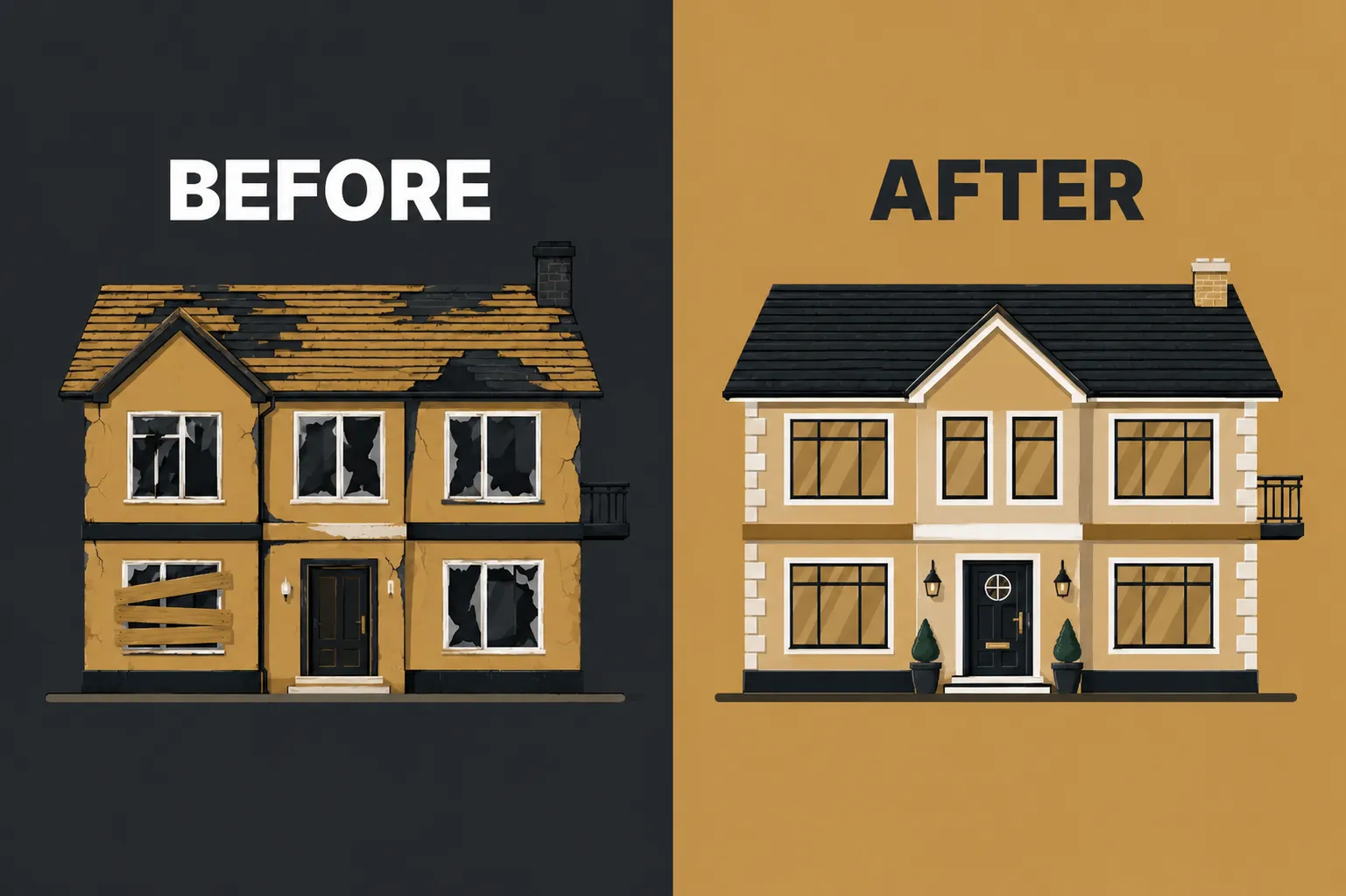
Most people who come to me already talked themselves out of doing their first deal before they ever picked up the phone.
They think they need a pile of cash sitting in the bank. They think lenders want to see a track record of five or ten flips before they’ll work with you. They think it’s only possible if you have perfect credit or know the right people.
I get it. Those assumptions feel reasonable, especially if everything you know about flipping houses comes from HGTV. But most of them are just flat wrong — and in this post I want to break down exactly what it actually takes to get into your first fix and flip deal.
The Myth That Stops Most People Before They Start
The biggest barrier I hear from first-timers is this: “I don’t have enough cash.”
Here’s the thing: you don’t need to buy a house with cash to flip it. That’s not how most investors do it, even experienced ones.
Hard money loans exist specifically for this. They’re short-term loans designed for real estate investors who want to buy, rehab, and sell a property. The lender looks primarily at the deal itself — not your personal income, your W-2, or your debt-to-income ratio. They care about the after repair value (ARV) and whether the numbers make sense.
For first-time investors, we typically fund up to 87.5% of the purchase price plus 100% of the rehab budget. That gets you to around 90% loan-to-cost on a deal.
On a $200,000 purchase with a $50,000 rehab budget — not $250,000. That's a completely different conversation.
What You Actually Need to Qualify
Here’s a realistic picture of what lenders like me look at when a first-timer comes to us:
- Credit score The target is 680+, but 650 is the floor we work with.
- A deal that pencils We want your all-in cost to stay under 75% of the ARV. If the deal is priced right and your rehab numbers are realistic, that's a huge part of the battle.
- Reserves Liquid reserves covering six months of interest-only payments plus 20% of your rehab budget. This sits in your account — it's a cushion, not money you spend on the project.
- A clear exit strategy Know how you're selling this thing. That's it.
Notice what’s not on that list: a decade of experience, a contractor’s license, or a massive net worth. First-time investors do get funded. It happens every week.
The Numbers Actually Work
In Q1 2026, the median U.S. house flip involved buying at $260,000 and selling for $326,000 — a $66,000 gross spread before costs.
After you account for interest, closing costs, rehab overruns, and selling fees, the net picture tightens. But deals in the right markets with the right numbers still work. Pennsylvania and Maryland have been posting statewide ROIs above 70% consistently. Other pockets around the country are strong too.
The point isn’t that every deal prints money. It’s that the math can work on your first deal if you buy right and budget honestly.
The investors who lose money on their first flip almost always do one of two things: they overpay for the property, or they underestimate the rehab. Both are learnable skills — they require due diligence and conservative numbers, not prior experience.
You Do Not Need to Swing a Hammer
Another one I hear constantly: “I’m not handy, I don’t know how to do renovations.”
Good. You shouldn’t be doing the renovations anyway.
Your job as an investor is to find the deal, finance it, manage the project, and sell it. You hire a contractor for the work. Most experienced flippers never pick up a tool — they’re running the business, not the jobsite.
Yes, you need to find a reliable contractor. That takes effort and vetting. But it’s not a reason to stay out of the game entirely.
The Speed Thing Is Real
One advantage of hard money that doesn’t get talked about enough: how fast it moves.
- We can close in as fast as two business days
- Average is somewhere between seven and ten
- Compare that to a conventional bank loan at 30–60 days — if it approves an investment property at all
In a competitive market, speed is leverage. A cash buyer isn’t always more attractive than an investor with hard money lined up. Sellers want certainty and a quick close. That’s something you can offer on deal one.
What Holding Costs Actually Look Like
I want to be honest here — a lot of people get starry-eyed on gross profit without thinking through carrying costs.
Our rates typically run 9 to 11%. On a $200,000 loan, that’s roughly $1,500 to $1,800 per month in interest. Flips in 2025 took an average of about 161 days from purchase to close, so you’re budgeting somewhere around $8,000 to $12,000 in interest on a deal that size.
That’s real money. It has to be in your numbers from day one.
At Best Lending Co, you only pay interest on funds you’ve actually drawn. If your rehab budget is $50,000 and you’ve only drawn $20,000, you’re only paying interest on $20,000 — not the full budget sitting undrawn.
That matters more than people realize when you’re trying to keep a project profitable.
The First Deal Is the Hardest Part
Not because the financing is hard. Not because the process is complicated. It’s hard because it’s the first time — and your brain is going to tell you all kinds of reasons not to do it.
Every person I’ve funded on their first deal had that moment. They second-guessed themselves. They called me three times asking if the numbers still worked. They wanted someone to tell them it was okay.
That’s normal. But the ones who went through it came out the other side with something that changes everything: a completed deal. From that point on, the second deal is easier, the third is easier still, and lender conversations start looking different because now you have a track record.
The first one just has to get done.
So What’s Actually Stopping You?
If you’ve been sitting on the idea of getting into fix and flip, think honestly about what the real blocker is:
- Is it that the numbers don’t work — or that you haven’t run the numbers on a specific deal yet?
- Is it that you can’t get financing — or that you haven’t had the conversation with a lender yet?
Most of the time, the barrier is the conversation that hasn’t happened. The deal that hasn’t been analyzed. The call that keeps getting pushed to next week.
Ready to see what's actually possible?
Book a call or run the numbers on our Fix & Flip Profit Calculator. No pressure, no pitch — just real numbers on a real property.
The first deal is closer than you think.